 Thinkbox
In Brief
While ‘culture’ was named Merriam-Webster's Word of the Year back in 2014, the term feels more relevant than ever today.
In the advertising and media industry, ‘culture’ has become one of the most frequently used words in the vocabulary of marketers, agencies, platforms, and creators. We hear constant references to brands ‘driving culture’, content shaping culture, culture being driven by the youth, things moving at the ‘speed of culture’ and platforms being at the centre of cultural conversations. But as the term has become more commonplace, has its meaning become less clear?
What do we actually mean when we talk about culture? Is it simply what's trending, or is it something deeper? How can marketers identify cultural significance, measure its impact, understand their role within it, and even anticipate where it's heading next?
To explore these questions, we commissioned cultural insight specialists everyday people to investigate what truly drives culture in the UK today. Through a dedicated research study, we set out to understand which forms of media people see as the most culturally significant, where cultural influence originates, and how different channels contribute to the conversations, behaviours, and moments that shape society.
Methodology
Cultural Advantage, by cultural insight specialists everyday people conducted a nationally representative survey of 2,000 UK adults (16+), assessing the cultural impact of key platforms.
Key Points
- UK values ‘continuity’ (relevance and influence over the longer term) in culture above all else
- Each media channel has a distinct cultural signature, influencing cultural associations in different ways
- TV has a strong advantage on the cultural entry points that matter
- TV ranked the UK’s most culturally significant medium
In Depth
Background
Few words are used more frequently in marketing today than ‘culture’.
Brands want to be part of it. Platforms claim to shape it. Creators are said to drive it. Yet for a concept that sits at the heart of so many marketing strategies, culture often remains frustratingly difficult to define (let alone measure).
Is culture simply what people are talking about right now? Is it created by media, or merely reflected by it? And if culture is as important as we believe, how can marketers identify it, measure it, and understand the role different channels play in shaping it?
To answer these questions, we partnered with cultural insight specialists everyday people to explore the relationship between media and cultural influence.
Our research set out to uncover which media channels have the greatest impact on culture today, and what that tells us about the way ideas, behaviours, and conversations spread through society.
Methodology
To measure the cultural influence of media and content, a bespoke research framework was developed by everyday people, grounded in how audiences experience and interpret culture in everyday life.
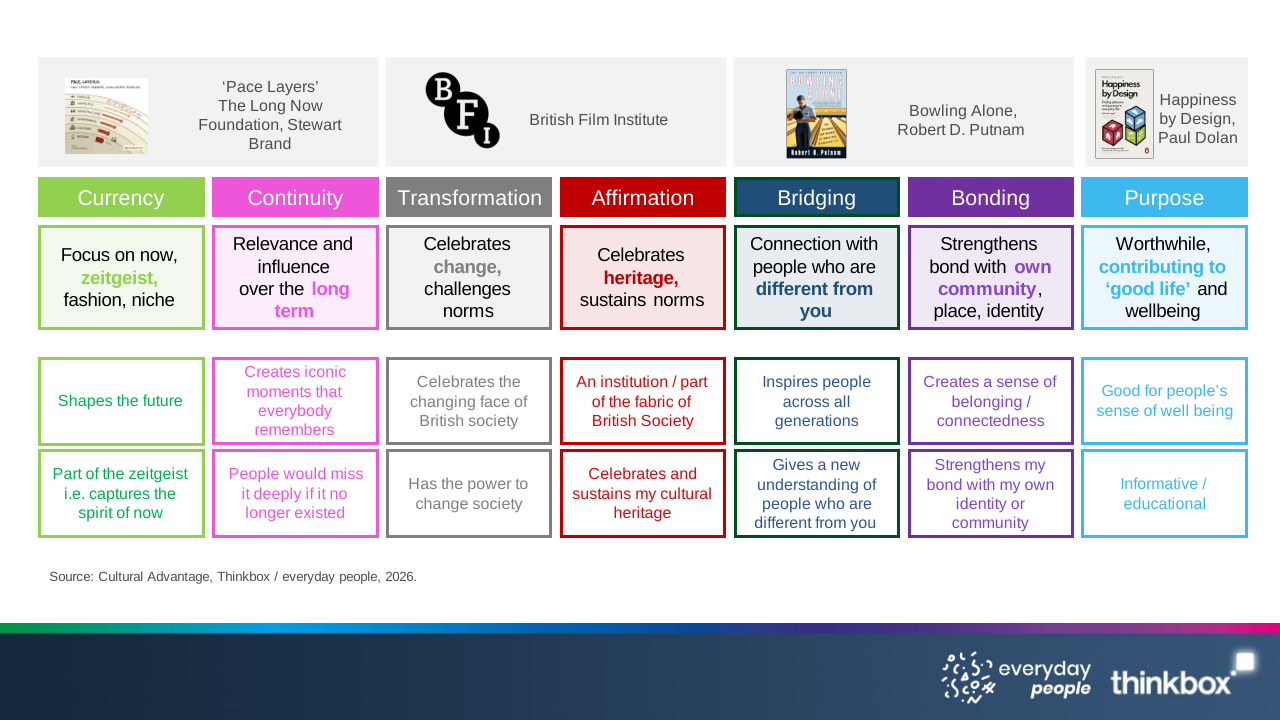
Drawing on insights from academic literature, the framework distilled cultural impact into seven core lenses: affirmation, bonding, bridging, continuity, currency, purpose and transformation. Each lens is defined by a set of cultural associations that collectively capture how media contributes to people’s lives and wider culture.
The framework was used to measure the share of cultural entry points across media and content. In branding, Byron Sharp argues that mental availability is built by getting the biggest share of relevant network of brands associations (category entry points.) Applying the same principle to culture, we can think of cultural advantage as a brand’s share of cultural entry points—the extent to which it is associated with the cultural moments, conversations, and contexts that matter to people.
Statistical modelling, including regression analysis conducted by everyday people, identified the cultural lenses most influential in shaping people’s attitudes, behaviours and ways of life.
A nationally representative sample of 2,000 UK adults aged 16+ was recruited by everyday people. The respondents were surveyed on the cultural availability of different media channels, including television (such as BBC, ITV, ITVX, iPlayer and Netflix), cinema, radio, podcasts, video-sharing platforms (including YouTube), social media platforms (such as TikTok, Instagram and Facebook), newspapers and magazines, and content creators.
The Headlines
UK values ‘continuity’ in culture above all else
Everyday people drew on established academic literature to develop seven core lenses, or ‘cultural entry points.’ The concepts of currency and continuity were informed by Stewart Brand's Pace Layers framework and the work of the Long Now Foundation. Transformation and affirmation were derived from the cultural value frameworks developed by the British Film Institute (BFI). Bridging and bonding were informed by Robert D. Putnam's research, while purpose was drawn from Paul Dolan's work on happiness and wellbeing. Together, these seven lenses formed the foundation of the survey, with individual statements designed to measure and map respondents' attitudes across each cultural entry point.
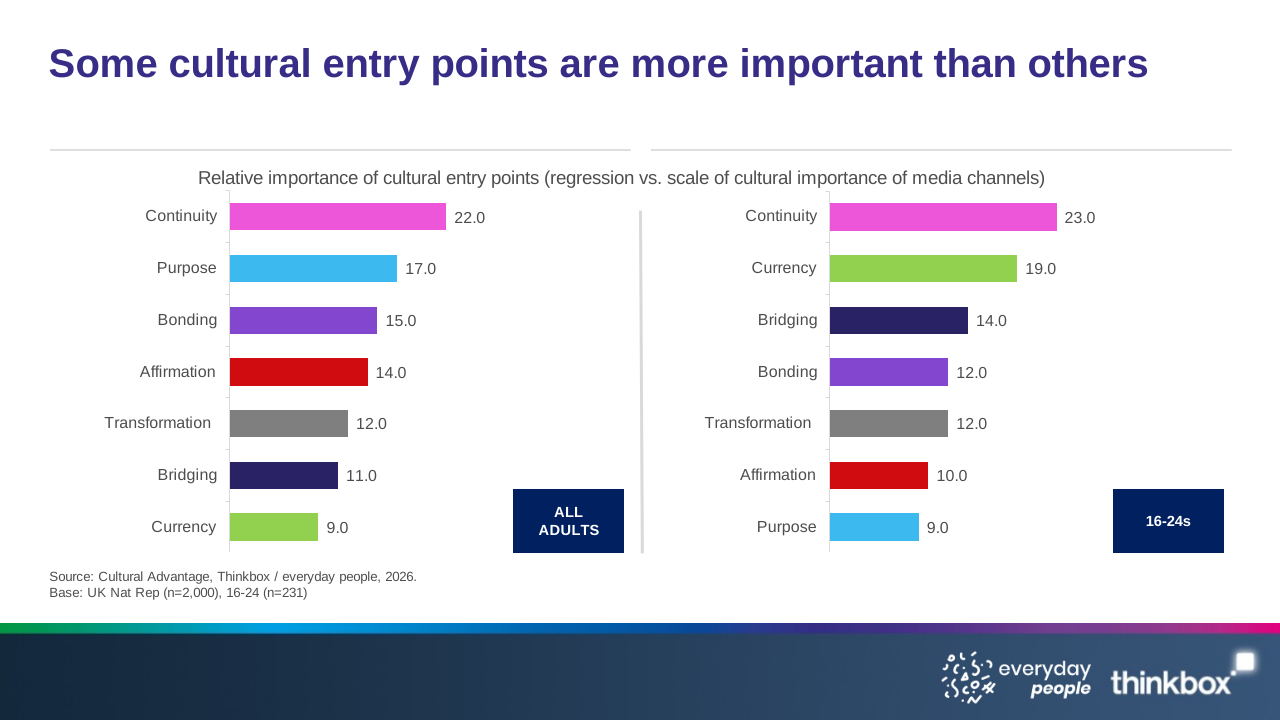
Everyday people conducted regression analysis to determine which cultural entry points have the greatest influence on shaping culture and people's way of life. The study found that continuity – things with influence and relevance that last – had a 22% share of importance, playing the most important role in how media shapes culture and the way of life for people in the UK.
Purpose – how culture positively influences people’s sense of wellbeing and contributes to ‘good life’ – is the second most important aspect in how media shapes culture in the UK with a 17% share of importance.
By contrast, currency – fashionable or faddish moments in the zeitgeist – plays the least important role with a 9% share of importance.
Among 16–24-year-olds, however, the picture shifts. While continuity remains the strongest driver, currency rises to become the second most important factor, reflecting younger audiences’ greater engagement with emerging trends, social movements and fast-evolving cultural moments.
For this audience, media’s ability to capture what is happening now and participate in real-time cultural conversations plays a more significant role. Purpose becomes less influential compared with the wider population, suggesting that younger audiences may place greater value on relevance, participation and cultural momentum when considering how media shapes their lives.
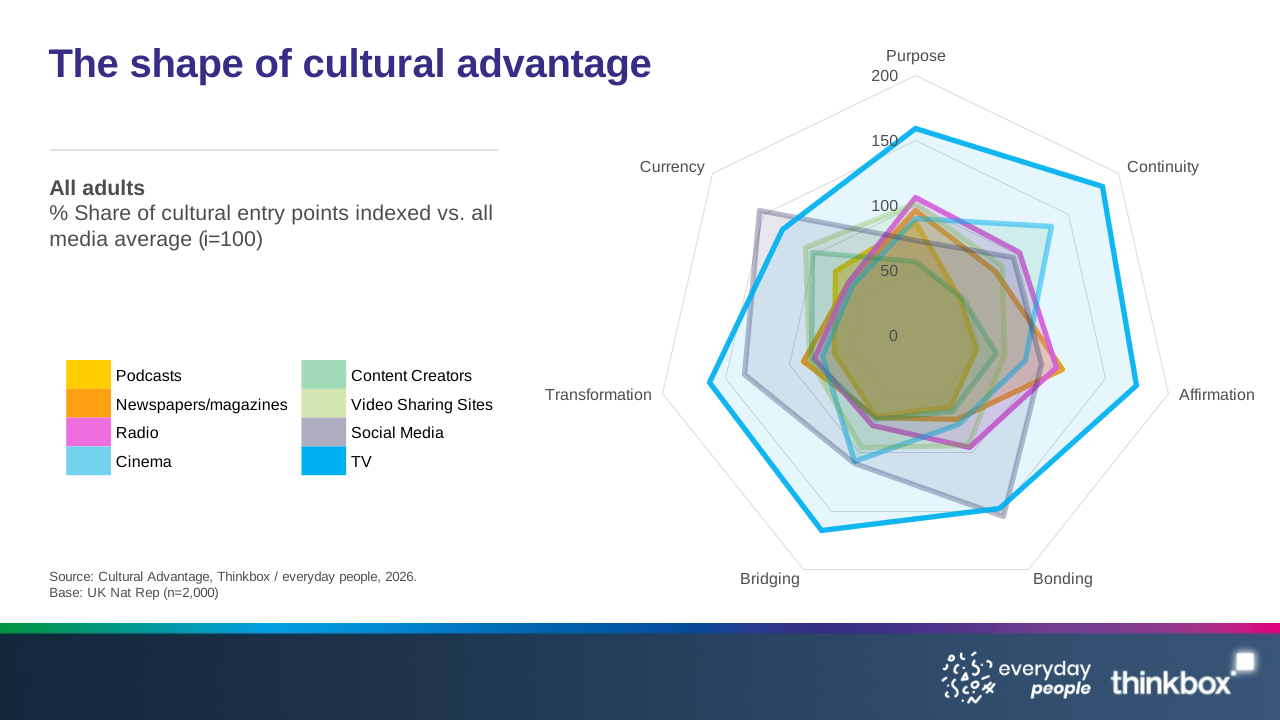
Each media channel has a distinct cultural signature, influencing cultural associations in different ways
The analysis also measured the performance of each cultural lens by channel. The larger the area represented, the more holistic and culturally advantaged a channel is across the full range of cultural entry points.
When mapped against the media channels included in the study, TV demonstrates the strongest and most comprehensive cultural signature. Its profile envelops those of other channels, indicating consistently stronger performance across a broad range of cultural entry points. In particular, TV excels on dimensions such as affirmation and continuity, reflecting its ability to create lasting cultural influence over time.
Social media is particularly strong on currency and bonding, reflecting its ability to drive real-time cultural conversations and foster community connection.
Content creators, meanwhile, demonstrate strength in currency and transformation by inspiring audiences, shaping perspectives and connecting people across different interests and communities. However, their overall cultural footprint remains less extensive than TV, which continues to lead through its unmatched ability to create shared cultural experiences at scale.
TV has a strong advantage on the cultural entry points that matter
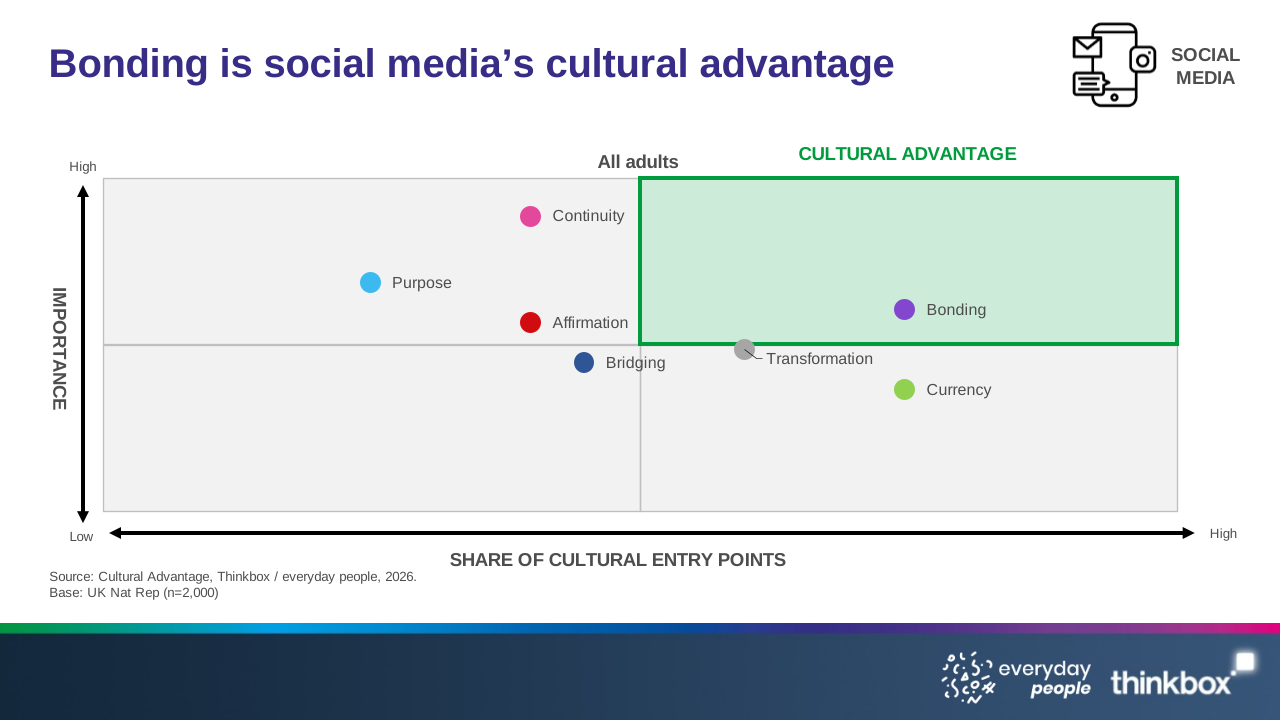
Another way to assess cultural advantage is to plot the importance of each cultural entry point against a channel's share of that entry point. Both of these metrics will vary by audience, so looking at the data in a matrix format is useful. The strongest position is the top-right quadrant, where channels are strongest on the cultural attributes that matter most.
For an all adult audience, looking first at content creators, their profile sits well outside this cultural advantage zone. Instead, they perform most strongly on the least important cultural entry points (e.g. currency), suggesting a misalignment between where they deliver value and the cultural drivers that have the greatest impact on shaping people's lives.

Social media performs more strongly overall, with bonding emerging as its key cultural advantage. However, it under-performs on continuity and performs weakest on purpose.
This is an important distinction: while people recognise social media's cultural influence, they do not necessarily see it as a positive one. Purpose reflects personal growth, wellbeing and living a good life - areas where social media falls short. The contrast between its scores on purpose and transformation – its ability to celebrate change and challenge norms - also mirrors wider concerns about the impact and safety of social media.
Crucially, TV leads on the cultural entry points that matter most such as continuity and purpose. It consistently over-performs on the dimensions that have the greatest influence on shaping, reinforcing its position as a channel with a strong and enduring cultural advantage.

When we look at the same data for 16–24s, social media’s cultural strength among 16–24s is far more concentrated, with currency standing out as its primary area of advantage.

Meanwhile, TV slightly trails social media in overall cultural share, but it remains a strong performing channel overall for this age group. Its key advantage is continuity, while it also holds its own on currency, matching content creators on this dimension.
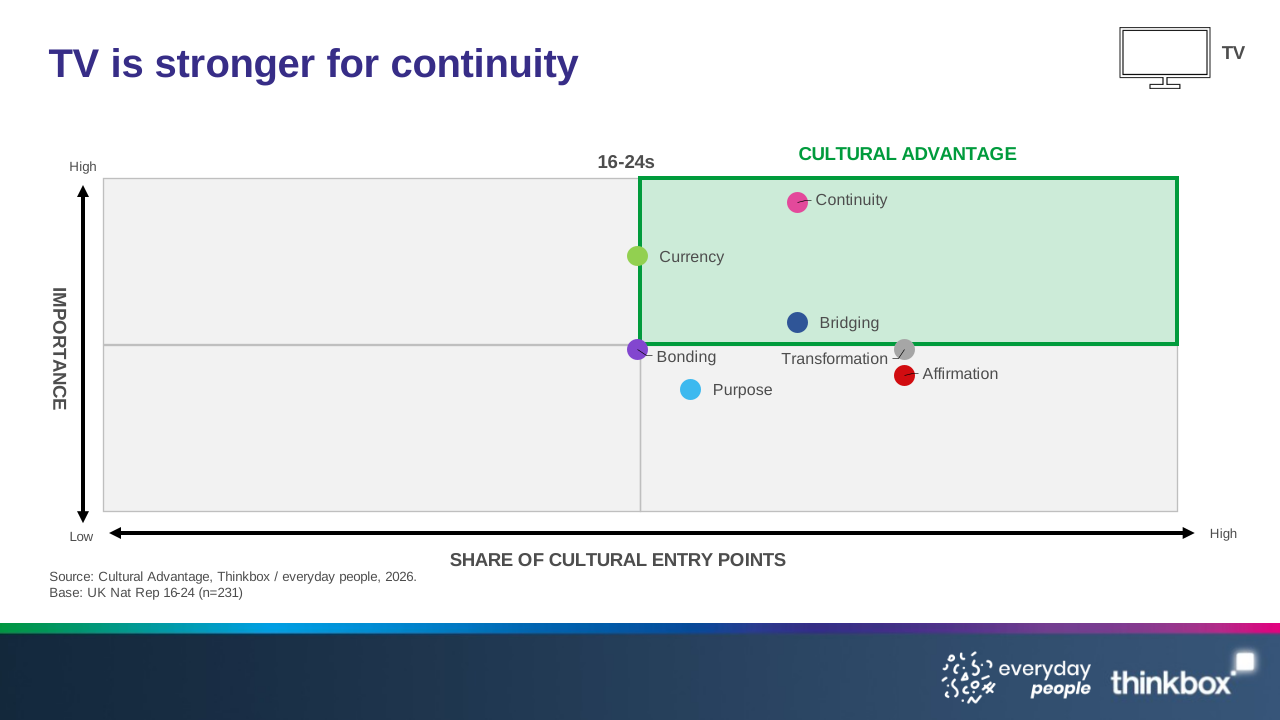
TV ranked the UK’s most culturally significant medium
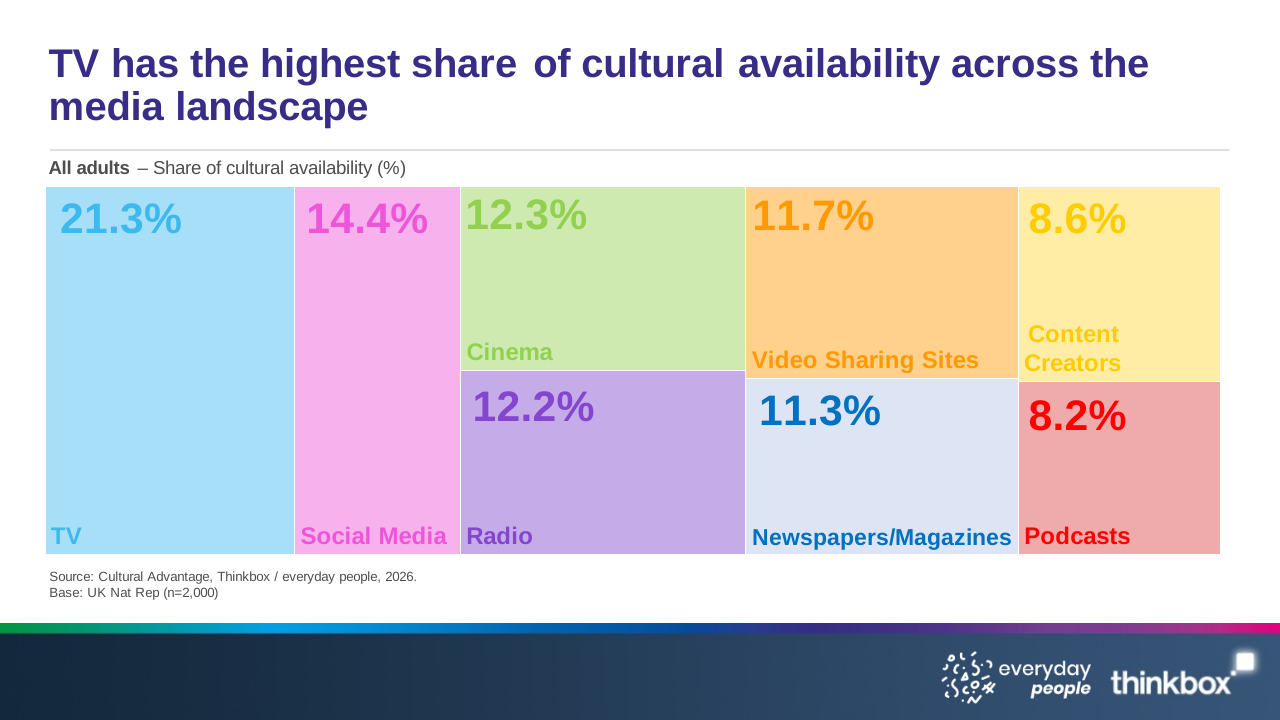
As well as understanding different media’s impact on different types of cultural associations, everyday people calculated an overall cultural impact for different media channels incorporating all seven lenses.
They found that TV accounts for 21% of media’s cultural impact, followed by social media (14%), cinema (12%), radio (12%), and video sharing sites (12%). The media with the least cultural impact are content creators (9%) and podcasts (8%).
For 16-24s specifically, social media had 19% and TV 17%. These were followed by video sharing sites (15%), cinema (13%), content creators (12%), radio (8%), newspapers/magazines (8%), and podcasts (8%).
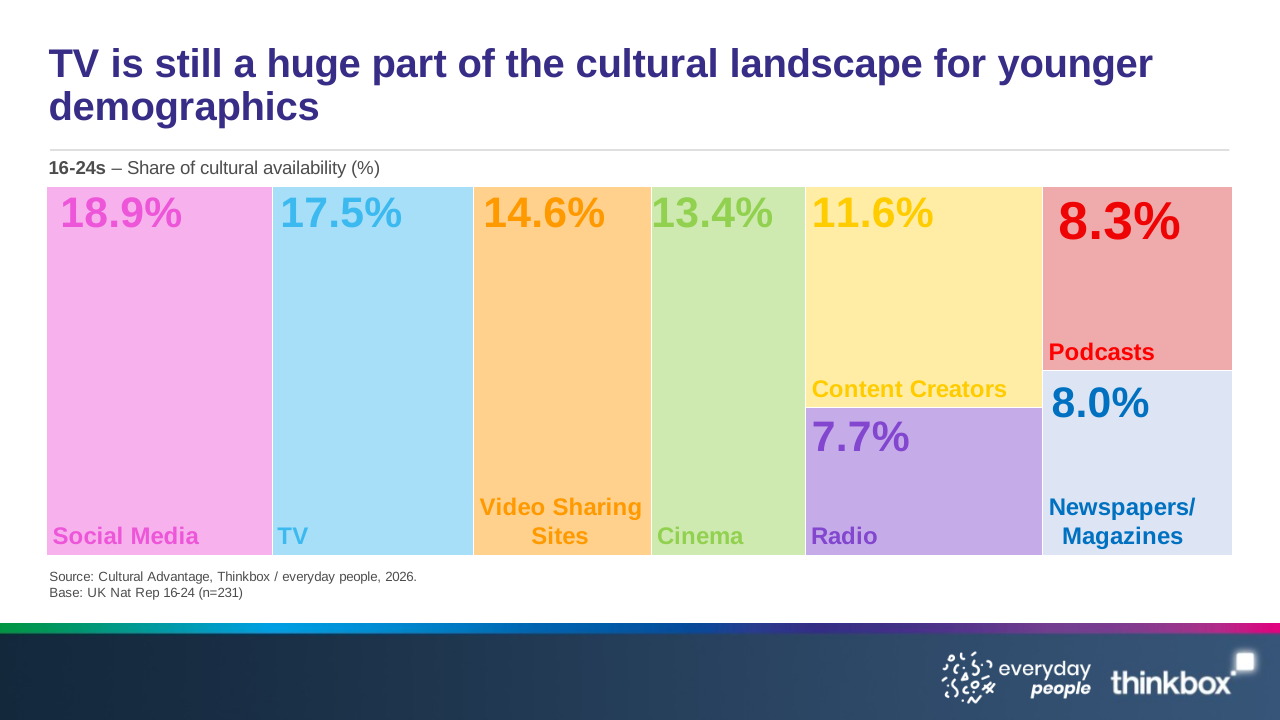
This analysis shows that a holistic view of culture is essential to understanding its key drivers. Rather than culture being driven solely by the latest trends or channels like social media and content creators, different media channels influence different cultural dimensions, with TV providing the most comprehensive cultural impact.
In summary
This research, conducted with everyday people, examines how different media channels shape culture and how cultural influence can be defined, measured, and understood in a consistent way. The findings show that UK culture places greatest value on continuity—ideas, behaviours, and influences that endure over time—rather than short-term or transient moments in the zeitgeist.
Within this framework, TV emerges as the UK’s most culturally significant medium, with a comprehensive cultural signature and a clear advantage across the cultural entry points that matter most in shaping people’s lives and behaviours. It consistently over-indexes on these high-value dimensions, reinforcing its role as a foundational cultural force rather than a purely momentary one.
TV remains a dominant channel overall, ranking second only to social media among 16–24s, but continues to lead in the breadth and depth of its cultural impact. Unlike more narrowly concentrated platforms, it delivers influence across multiple cultural dimensions simultaneously.
Ultimately, the study highlights TV’s unique ability to deliver a holistic cultural role for brands, combining scale, depth, and enduring relevance—making it the most effective channel for sustained cultural influence in the UK.
